Range Repair
Viking Range Replacement Grates, and When the Range Is the Issue
Viking range replacement grates are ordered by the base model number on your rating plate, not by cooktop width, so the feet and height match the burners. A cracked grate is a parts swap you can do yourself, never a reason on its own to replace the range.
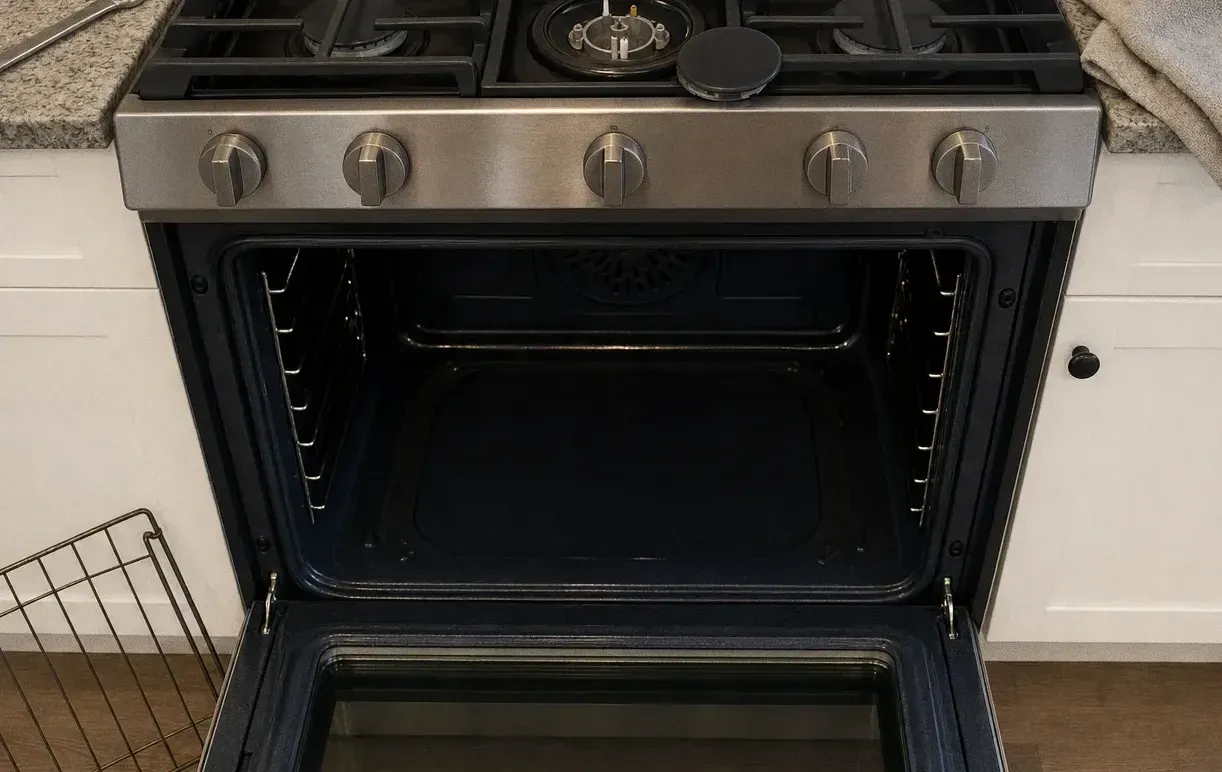
To get replacement grates for a Viking range, start with the model number on the range’s rating plate, not the width of the cooktop. Each grate is cast to sit at a set height over its sealed burner and to rest on particular points of the cooktop, so two 36-inch Viking ranges from different series can take grates that look almost identical and still rock, sit low or crowd the flame. With the base model number in hand, a genuine grate lifts into place with no tools in about a minute. A grate is a part you buy, not a repair, so a cracked or chipped one is never by itself a reason to give up on the range.
Grates take more punishment than anything else on a pro-style range: heavy stockpots, dropped skillets and nightly scrubbing. The useful question is whether worn grates are the whole story or the most visible sign of an older range that is starting to need real work. This guide covers both.
Find the model number before you shop
Viking prints the model and serial number on a rating plate, and where it hides depends on the series. A 5 Series freestanding gas range can carry it in any of three spots. Lift off the left-front grate and check the side panel below its support or the burner bowl; failing that, try the frame of the oven face just below the controls, or bend down and look beneath the control panel over the door. For a 7 Series, swing the oven door down and the label sits on the underside of the control panel. A Tuscany dual fuel range keeps its plate on an inside wall, which you can see once the storage drawer is out.
Copy the whole string. Viking builds a model number from the base model, a two-letter color abbreviation and, on some ranges, a gas-type code. In Viking’s own example, VGIC53024BWHLP breaks down as base model VGIC53024B, WH for white and LP for propane. Parts listings are usually searched by the base model, so that is the piece to type in.
The serial number settles the age question at the same time. Read its opening six digits as a date in month-day-year order: a serial such as 082421C10019872 means the range was made on August 24, 2021.
Genuine, used or aftermarket grates
Search for Viking stove grates and you will find plenty of listings that claim a fit, many of them on Amazon. Some are genuine Viking parts resold; many are aftermarket castings made to the outside dimensions of a popular size. Before buying anything that is not clearly a genuine part for your base model, compare it with the grate you are replacing:
- Feet and footprint. The feet should land where the old ones did, with the rubber bumpers that stop the grate sliding and scratching the cooktop.
- Finger height. Measure from the top of the burner cap to the top of the grate fingers. A grate that sits too low pushes the pan into the flame, which gives a yellow, sooty flame and black rings on cookware; one that sits too high lets heat spill around the pot.
- Edges. Where grates sit side by side, the new one should meet its neighbors flush, so a pot slides across without catching.
Burner output is the reason height matters. A 5 Series gas range uses 15,000 BTU sealed burners (12,500 BTU on LP), and some models add a TruPower Plus front-right burner rated at 18,500 BTU on natural gas or 16,600 on LP. A Tuscany range spreads its burners from 8,500 to 20,500 BTU. Flames that size are designed around a specific gap under the pan. If a listing cannot name your base model, the genuine grate is the safer buy.
Looking after the grates you keep
Viking grates are porcelain-enameled cast iron. A small chip on an edge is cosmetic, but the bare iron underneath can rust, so dry grates completely after washing rather than leaving them in a wet rack. Soak baked-on spills in hot, soapy water and use a non-scratch pad; harsh abrasives and oven cleaner dull and wear the coating. Check your use and care guide before putting grates in a dishwasher or the oven’s self-clean cycle. Lift them with two hands and set them on a towel, because enamel chips most often when a heavy grate is dropped onto stone.
Replace a grate once a finger cracks, a foot breaks off or it rocks under a pot. A tippy grate under a full pot of boiling water is a burn waiting to happen.
When the grates are pointing at a burner
Grates that blacken heavily over one burner, or wear unevenly from side to side, can be telling you about the burner beneath them. A healthy sealed burner gives a steady blue flame with even cones all the way round. A lazy yellow flame, a ring that lights on one side only, or a burner that clicks without catching is a burner job, not a grate job. Our walkthrough on a burner that clicks but will not light covers the checks a homeowner can make safely. When a part does need replacing, an igniter or burner assembly typically falls in the $270–$640 range, with the firm figure given after diagnosis.
Look at the warranty before you pay for anything. Viking’s indoor warranty covers a range in full for two years, counted from purchase or from the closing on a newly built home, whichever gives the longer period. In years three through five Viking supplies certain parts, gas burners among them but not the ignition system, burner bases or caps, while the owner pays for labor and shipping.
Repair the range or replace it
Worn grates never decide this question on their own. Four things do.
Age. Read the build date from the serial number. A range that is a few years old is almost always worth repairing.
The failing part. Grates, burner caps and knobs are owner-replaceable parts. Real repairs have typical ranges: $270–$640 for an igniter or burner assembly, $250–$800 for an oven thermostat or heating element, and $380–$850 for a control board or touch panel. Set those against a comparable Viking unit at $6,610–$11,430 for the appliance alone.
How often it has failed. One burner repair in a decade is ordinary wear. The same fault returning every season, or several different faults in one year, suggests the range is wearing out as a whole.
What replacement involves. A pro-style range is not a simple swap. The new one must be matched to the opening: the 5 Series runs from 30 to 60 inches wide, the 7 Series comes in 36 and 48, and the 3 Series only in 30. Its anti-tip brackets have to be installed, not thrown away with the packaging. On a 5 Series, cabinets directly overhead must be at least 42 inches above the cooking surface unless a hood is fitted. A home on propane needs conversion kit LPKPDR01 fitted to a 5 Series by a qualified technician, because that is gas work.
Getting a second pair of eyes
If you would like someone to confirm the model, check every burner flame and tell you plainly whether the range is worth keeping, Viking Repair Andover covers Andover Center, Shawsheen Village, Ballardvale and North Andover. We charge a flat $95 to come out and diagnose the range completely, and if you approve the repair, that amount is credited toward it. See our Viking range repair page or call (781) 790-4760.
Still asked on the phone
Can I buy Viking range replacement grates on Amazon?
Yes, but judge each listing by your base model number rather than the range width. Some listings are genuine Viking parts and many are aftermarket castings. An aftermarket grate is only a good buy when its feet, finger height and edges match the grate it replaces. If the listing cannot name your base model, buy the genuine part.
Which number do I need to order Viking replacement parts?
You need the model number from the rating plate, and the base model is the part that matters most. Viking adds a two-letter color code and sometimes a gas-type code after it, as in VGIC53024BWHLP, where VGIC53024B is the base model. Note the serial number as well, because its first six digits give the build date.
Is a chipped Viking stove grate safe to keep using?
Usually yes, as long as the chip is small and the grate still sits flat and steady. A chip exposes cast iron that can rust, so dry the grate fully after every wash. Replace it once a finger cracks, a foot breaks off or the grate rocks under a pot.
Should I replace my whole Viking range because the grates are worn?
No. Grates are a separate part you can fit yourself in a few minutes, while a comparable Viking range typically runs $6,610–$11,430 for the appliance alone, before installation. Replacing the range makes sense only when burners, oven parts or controls keep failing on an older unit and the repairs start to stack up.