Refrigerator Repair
Problems With Viking Refrigerators, Symptom by Symptom
The most common problems with Viking refrigerators are a warm fresh-food side from a dusty condenser or a stalled fan, frost from a failed defrost system, and water under the drawers from a blocked drain. Check the coil and vents first, then call if it stays above 40°F.
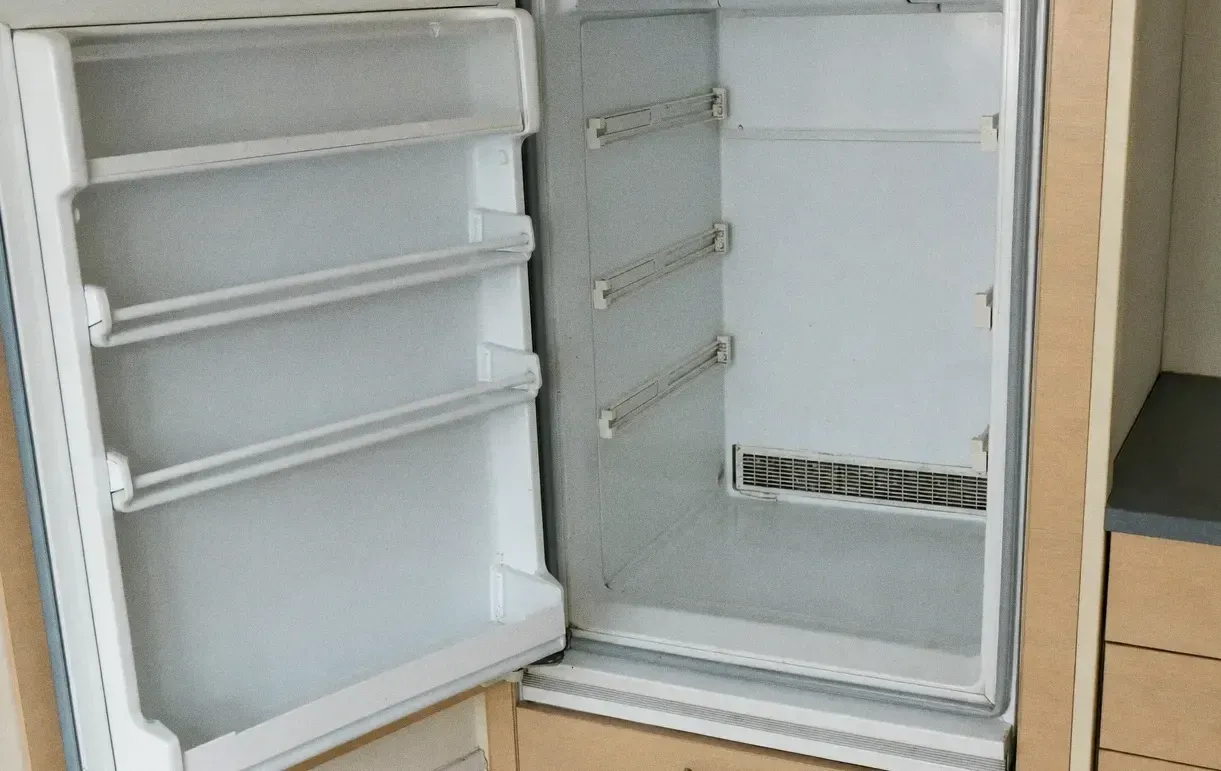
Most problems with Viking refrigerators show up as one of four symptoms: a fresh-food side that creeps above 40°F while the freezer still feels cold, a white crust of frost on the back wall of the freezer, water collecting under the crisper drawers or on the floor, and a compressor that hums along without ever stopping. In that order, the usual culprits are airflow, meaning a dirty condenser or a dead fan, and then a defrost system that has given up. First, stand a thermometer in a glass of water on the middle shelf overnight. A reading of 37°F is healthy; anything over 40°F means it is time to work through the checks below.
A built-in Viking is boxed into cabinetry on three sides, so it has less room to throw off heat than a freestanding fridge, and a small airflow fault turns into warm milk faster than most owners expect.
Warm fresh food, cold freezer: start with airflow
This complaint rarely arrives overnight. On most Viking built-ins the compressor and condenser coil live at the top, behind the grille above the doors. That coil is where the heat pulled out of the cabinet goes, and once lint and cooking grease blanket it, the compressor has to run longer for the same result. The fresh-food section loses ground first because, on models that share one evaporator, it only gets cold air second-hand.
The next suspect is the evaporator fan, the small fan behind the freezer’s rear panel that pushes cold air through the vents. Open the freezer and hold the door switch in with a finger. Within a few seconds you should hear the fan or feel air moving. Silence, a ticking blade or a squeal that comes and goes all mean a fan near the end of its life. The condenser fan up top can fail too, and then the compressor overheats and shuts itself off.
Frost on the freezer wall: the defrost system
Every few hours a frost-free refrigerator warms its evaporator coil briefly to melt the ice that forms on it. That job falls to a heater, a sensor or thermostat that tells it to stop, and a timer or control board that decides when to begin. Lose any one of them and frost piles up until the coil, and the air meant to pass through it, is blocked. You will see an even white frost on the rear panel, or feel almost nothing from the vents even though the fan turns.
A manual defrost is a useful test. Empty the unit into coolers, switch it off, leave the doors open with towels down and give it most of a day. If it then cools normally for a week or two before warming again, the defrost system is at fault, not the fan or the sealed system.
Water under the drawers or on the floor
Meltwater from each defrost cycle runs down a trough into a drain tube and on to a pan near the compressor, where it evaporates. When that drain freezes solid or clogs with crumbs, the water backs up. It either freezes into a sheet on the freezer floor or spills into the fresh-food side and pools beneath the crisper drawers.
Water on the kitchen floor has a short list of other sources: a cracked filter housing, a weeping supply line to the ice maker or dispenser, or a door gasket that has stopped sealing. Check each gasket with a thin card: close the door on it at four or five spots around the edge, and wherever it slides out with no drag, the seal has gone soft. In a humid Andover July a weak seal also shows up as sweat on the cabinet face and frost just inside the door.
Constant running, clicking, or an ice maker that quits
A compressor that never cycles off is almost always reacting to something above: a hot condenser, an iced coil or a leaking gasket. A click every few minutes followed by silence, with the cabinet slowly warming, is the overload protector cutting the compressor out. That can mean a failing start relay, a compressor cooked by a dead condenser fan, or a compressor that is wearing out. Ice makers stop for humbler reasons: a frozen fill tube, a filter long overdue for a change, low water pressure, or a shutoff arm left raised.
Safe checks before you call
- Confirm nobody has nudged the controls; aim for about 37°F in the fresh-food side and 0°F in the freezer.
- Pull back anything pressed against the rear vents, often a tall container.
- With the power off, vacuum the condenser behind the top grille using a soft brush attachment.
- Hold the door switch and listen for the evaporator fan.
- Run the card test on every door gasket.
- Replace the water filter if it has been in for more than six months.
Stop there. Never chip ice off the evaporator with a knife or screwdriver, never take the rear panel off with the unit powered, and leave refrigerant and tubing alone. One punctured coil turns a moderate repair into a sealed-system job.
When it needs a technician, and what it typically costs
Call when the middle shelf stays above 40°F after a clean coil, when frost returns after a manual defrost, when the compressor keeps clicking on and off, or when you notice a burning smell or grinding from the top compartment. Every Viking refrigerator repair visit begins with measured temperatures in each compartment and at the coil, so the diagnosis rests on readings rather than hunches.
As typical ranges, a refrigeration fan or defrost system repair runs $300–$710, and compressor or sealed-system work runs $1,040–$2,500. You get a firm quote once the fault is found. The visit is a flat $95 that pays for the whole diagnosis, and that amount comes off the bill if you approve the repair. Weigh the bigger figure against replacement: a comparable Viking unit, appliance only, typically runs $6,610–$11,430 before any panel or cabinetry work.
We fit factory-approved parts and cover Andover Center, Shawsheen Village, Ballardvale and North Andover. Call (781) 790-4760 to book.
Still asked on the phone
Why is my Viking refrigerator warm when the freezer is still cold?
Usually because cold air is no longer reaching the fresh-food side. The common causes are a condenser coil matted with dust, an evaporator fan that has stopped, or an evaporator coil iced over after the defrost system quit. Clean the coil first; if the middle shelf still reads above 40°F a day later, the fan or the defrost parts need a look.
How often should I clean the condenser on a Viking refrigerator?
Twice a year is a sensible habit, and more often in a house with pets or heavy cooking. Switch the power off, take off the grille that covers the coil and vacuum it gently with a soft brush attachment, stroking along the fins rather than across them so they do not bend.
Is a Viking refrigerator worth repairing?
In most cases it is, because fan, defrost and control faults cost a fraction of a new built-in. Typical ranges are $300–$710 for a fan or defrost repair and $1,040–$2,500 for sealed-system work, against $6,610–$11,430 for a comparable Viking unit, appliance only. The age of the unit and the health of the compressor settle the close calls.
Can I defrost a Viking refrigerator myself?
Yes, a manual defrost is a safe owner check. Move the food into coolers, switch the unit off, prop the doors open with towels on the floor, and wait until every trace of frost on the coil has melted, which often takes most of a day. If the frost returns within two weeks, the defrost system has failed.